Inorganic Chemicals Industry ›› 2025, Vol. 57 ›› Issue (12): 1-7.doi: 10.19964/j.issn.1006-4990.2025-0132
• Reviews and Special Topics • Next Articles
Research progress on Bi2WO6-based photocatalyst modification
MA Liang1,2,3( ), WANG Chunyan1,2,3, LIU Haining1,2, LI Mingzhen1,2, SONG Zhongmei1,2,3, ZHANG Siyuan1,2, YE Xiushen1,2()
- 1. Qinghai Institute of Salt Lakes,Chinese Academy of Sciences,Key Laboratory of Green and High-end Utilization of Salt Lake Resources,Xi′ning 810008,China
2. Key Laboratory of Salt Lake Resources Chemistry of Qinghai Province,Xi′ning 810008,China
3. University of Chinese Academy of Sciences,Beijing 101408,China
-
Received:2025-03-19Online:2025-12-10Published:2025-06-30 -
Contact:YE Xiushen E-mail:maliang@isl.ac.cn;yexs@isl.ac.cn

CLC Number:
Cite this article
MA Liang, WANG Chunyan, LIU Haining, LI Mingzhen, SONG Zhongmei, ZHANG Siyuan, YE Xiushen. Research progress on Bi2WO6-based photocatalyst modification[J]. Inorganic Chemicals Industry, 2025, 57(12): 1-7.
share this article
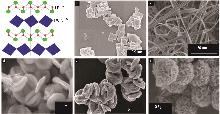
Fig.1
Crystal structure of Bi2WO6 and morphology of different Bi2WO6 materials[18-21]"
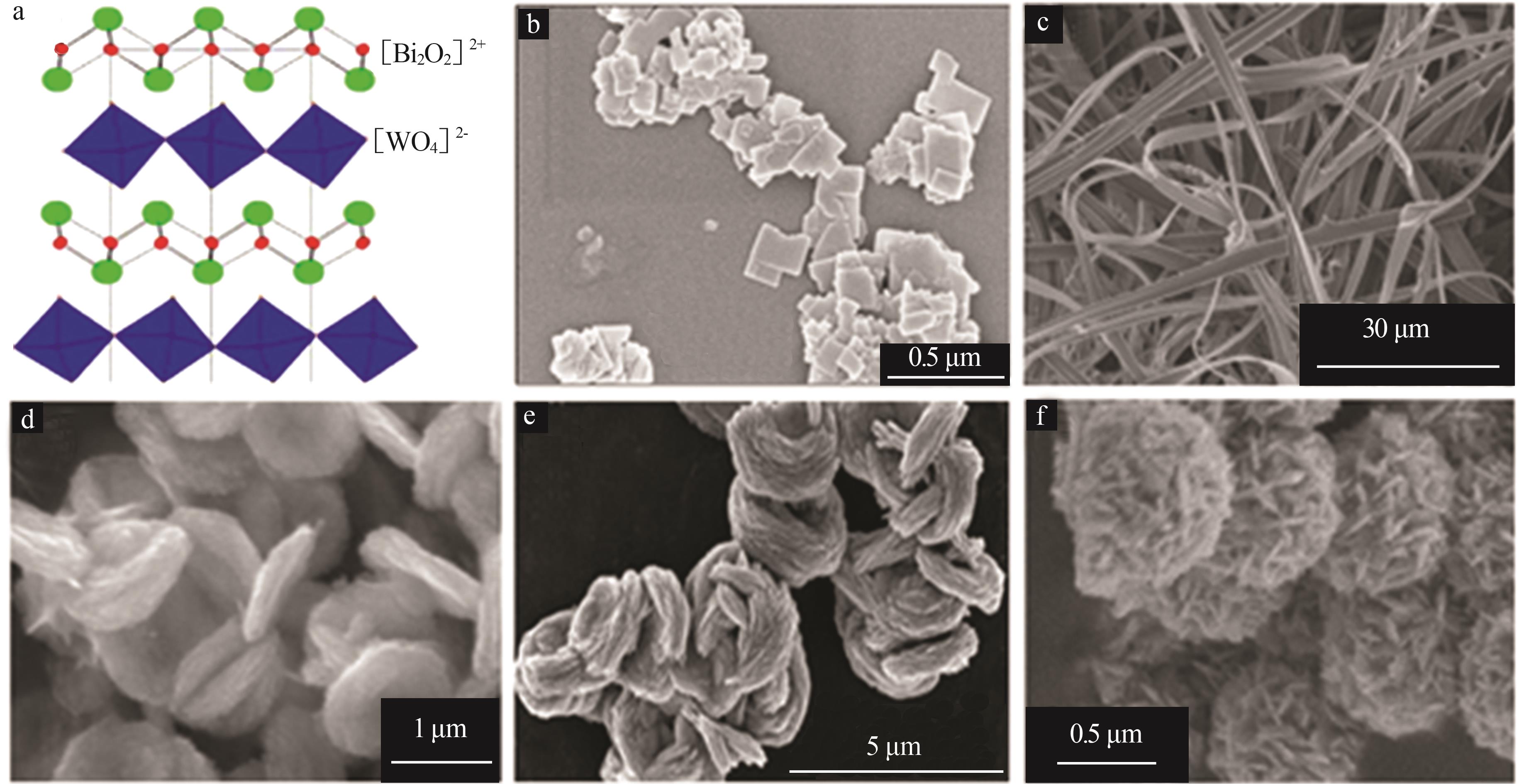
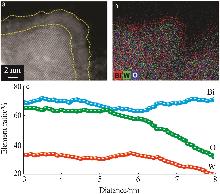
Fig.2
TEM image of tungsten-deficient Bi2WO6(a), mapping(b),and elemental EDS line scanning (c)[29]"
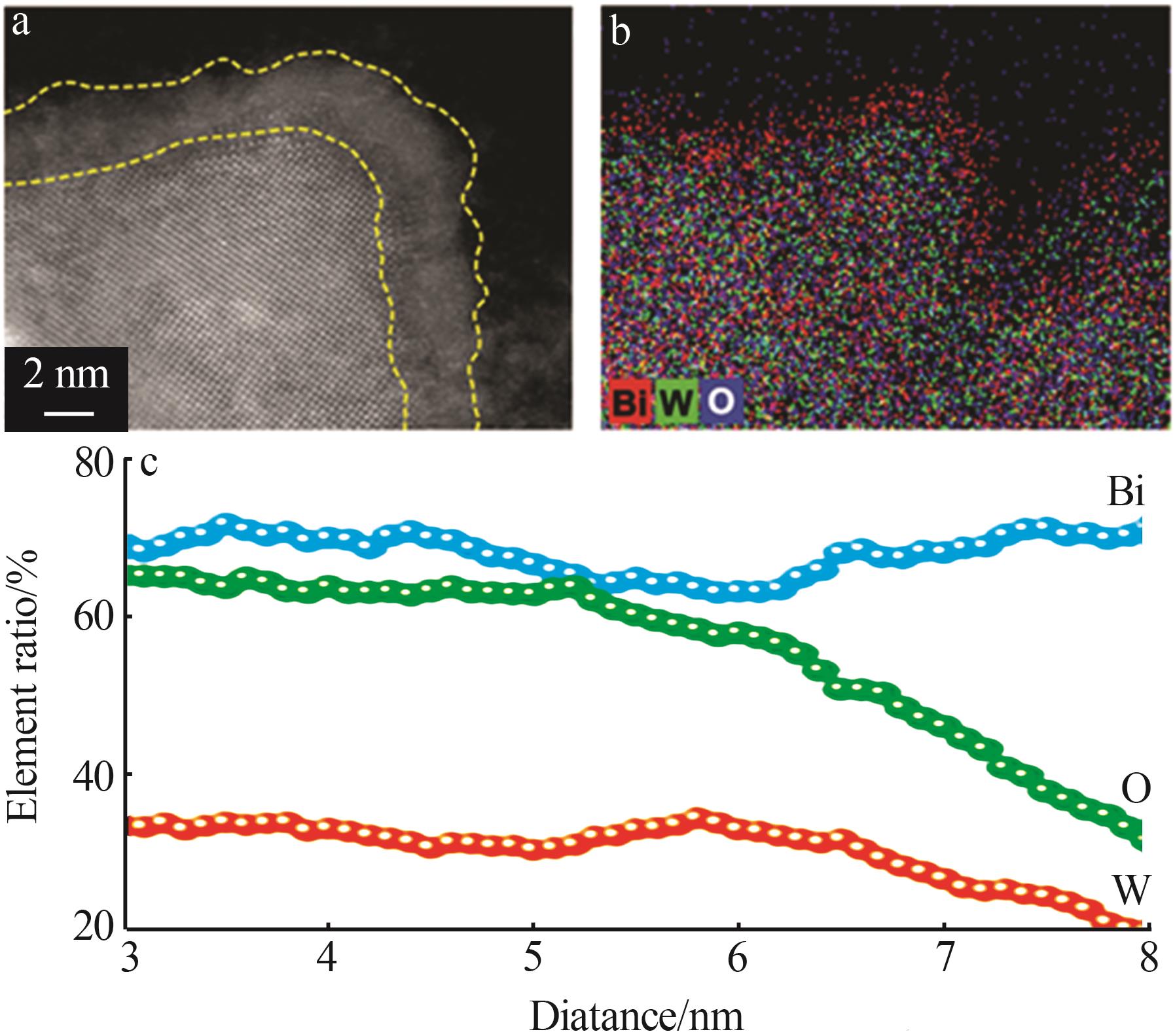

Table 1
Classification of heterojunction photocatalysts"
| 分类标准 | 名称 | 组分半导体的特点 | 异质结的特点 |
|---|---|---|---|
组分半导体 的能带结构 | Ⅰ型异质结 (跨间隙型) | B1CB高于B2CB,B1VB低于B2VB | 光照时系统内的电子和空穴均聚集到半导体B2上,能级上可实现电子的分级跃迁,减小材料Eg,但无法促进光生载流子的分离 |
Ⅱ型异质结 (间隙交错型) | B1CB、B1VB均高于B2CB、B2VB | 光照后,光生电子从半导体B1的CB 能级迁移到半导体B2的CB能级上,而光生空穴则从半导体B2的VB能级迁移到半导体B1的VB能级上,有利于光生载流子的分离 | |
Ⅲ型异质结 (间隙断裂型) | B1VB高于B2CB | 组分半导体间的带隙互不重叠,光生载流子不在组分半导体间发生迁移 | |
光生载流子的 流动机理 | 载流子单向流动异质结 | B2无法被光激发,载流子单向流动 | 仅在B2的CB上聚集e- |
| 载流子双向流动异质结 | B1、B2均能被光激发,载流子双向流动 | B1VB上聚集h+,B2CB上聚集e- | |
有无载流子 复合介质层 | 有载流子复合介质 层的S型异质结 | B1、B2均能被光激发,载流子双向流动 | 较弱氧化能力的h+和较弱还原能力的e-在电子介质层复合 |
无载流子复合介质 层的Z型异质结 | B1、B2均能被光激发,载流子双向流动 | 较弱氧化能力的h+和较弱还原能力的e-直接复合 |
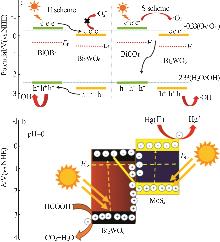
Fig.3
Carrier transport paths in BiOBr/Bi2WO6(a)[38] and MoS2/Bi2WO6(b)[39] heterojunctions"
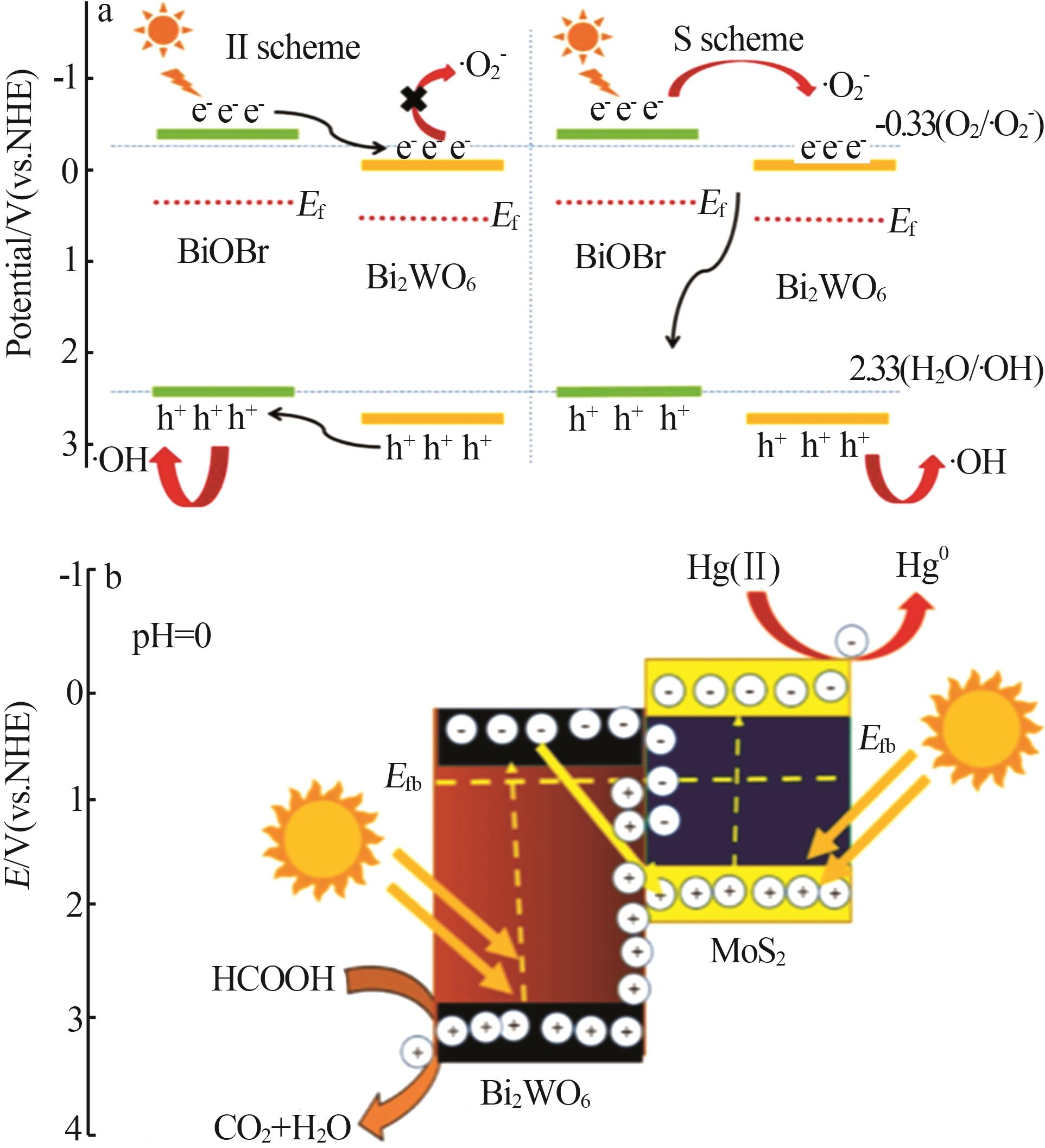
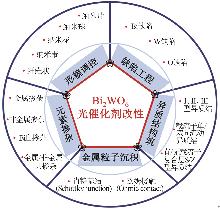
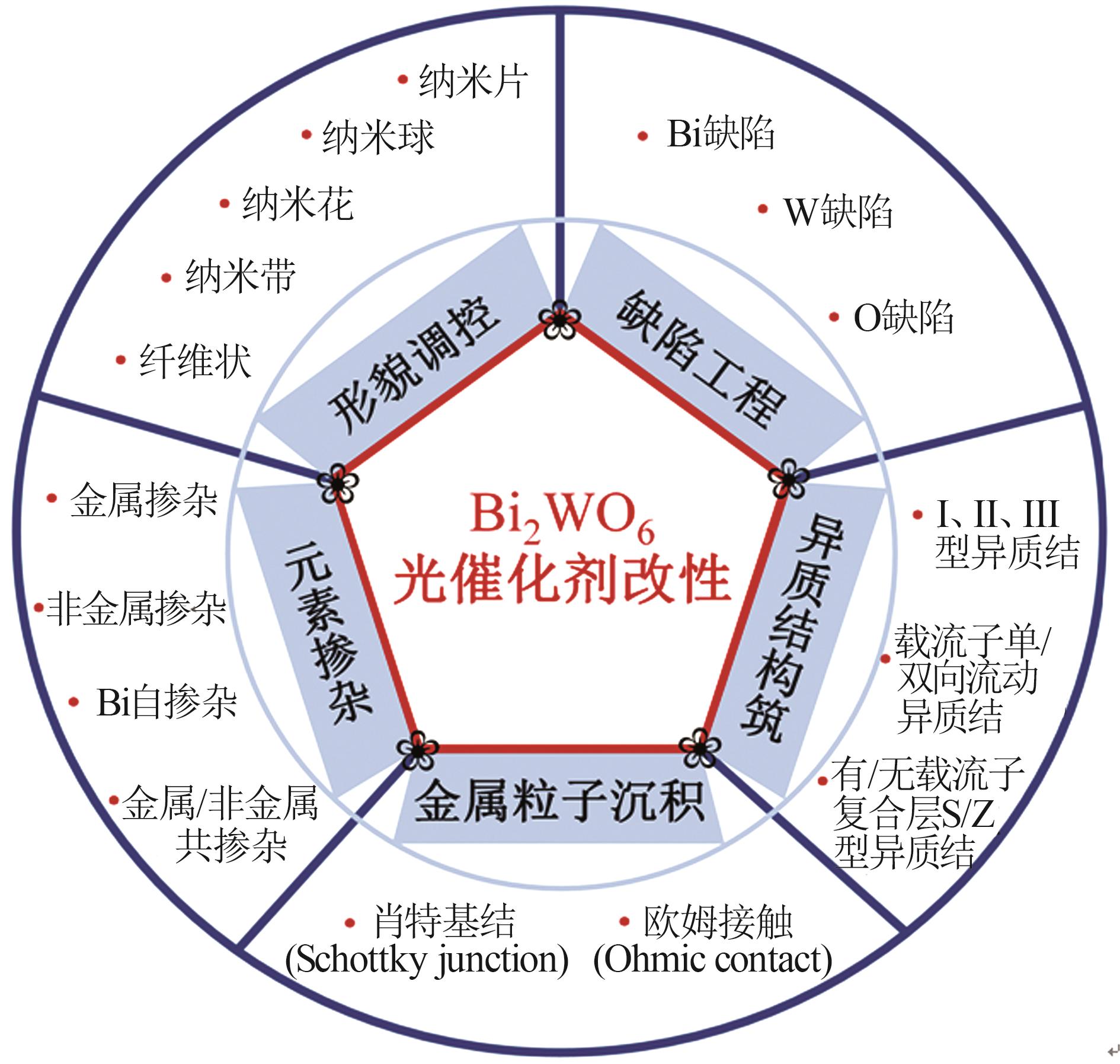
Fig.4
Schematic diagram of existing modification methods for Bi2WO6"
| [1] | FUJISHIMA A, HONDA K.Electrochemical photolysis of water at a semiconductor electrode[J].Nature,1972,238(5358):37-38. |
| [2] | MA Liang, LU Miao, LI Kexin,et al.Photocatalytic degradation of octadecylamine and 4-dodecylmorpholine over titanium based photocatalyst:Activity and mechanism insights[J].Chemical Engineering Journal,2023,472:144782. |
| [3] | CHEN Yan, YANG Weiyi, GAO Shuang,et al.Synthesis of Bi2MoO6 nanosheets with rich oxygen vacancies by postsynthesis etching treatment for enhanced photocatalytic performance[J].ACS Applied Nano Materials,2018,1(7):3565-3578. |
| [4] | FAISAL M, AHMED J, ALGETHAMI J S,et al.Facile synthesis of palladium nanoparticles/polypyrrole-carbon black/Bi2O3 ternary na-nocomposite for efficient photocatalytic degradation of colorless and colored pollutants under visible light[J].Arabian Journal of Chemistry,2023,16(12):105349. |
| [5] | MANDAL A, BHATTACHARYA G, KARGUPTA K.Enhanced yield of methanol using rGO-Bi2S3/CuO heterojunction photocatalyst for CO2 reduction[J].Journal of Materials Research,2024,39(13):1935-1950. |
| [6] | MENG Qingqiang, CAO Chihao, WANG Jing,et al.Atomically thin Bi2MoO6 nanosheets for efficient visible-light photocatalytic nitrogen fixation via O-vacancy tailored exposure of Mo sites[J].ACS Applied Nano Materials,2024,7(13):15808-15818. |
| [7] | ARORA I, GARG S, CHAWLA H,et al.Visible light active bismuth chromate/curcuma longa heterostructure for enhancing photocatalytic activity[J].Reaction Kinetics,Mechanisms and Catalysis,2024,137(6):2919-2931. |
| [8] | JIMENEZ-RELINQUE E, DAPPOZZE F, BERHAULT G,et al.Bismuth oxyhalide as efficient photocatalyst for water,air treatment and bacteria inactivation under UV and visible light[J].Journal of Photochemistry and Photobiology A:Chemistry,2024,452:115554. |
| [9] | PAN Chengsi, BIAN Gaoming, ZHANG Yaning,et al.Efficient and stable H2O2 production from H2O and O2 on BiPO4 photocatalyst[J].Applied Catalysis B:Environmental,2022,316:121675. |
| [10] | LENG Weiqi, JIANG Xuefei, HE Sheng,et al.Advanced BiVO4-deoxygenated lignocellulosic photocatalyst for effective degradation of organic and heavy metal pollutants in aqueous system[J].International Journal of Biological Macromolecules,2024,283:137948. |
| [11] | CUI Kuixin, QIAN Hui, HE Yuehui,et al.Novel chiral wire-like Bi nanoparticle assembly:In-situ studies on structural evolution from(BiO)2CO3 nanowires under electron-beam irradiation[J].Materials Today Chemistry,2024,42:102394. |
| [12] | QI Shuyan, GUAN Ling, ZHANG Ruiyan,et al.Mn doping enhances the photocatalytic performance of Bi2Fe4O9 photocataly- st[J].Optical Materials,2023,142:114112. |
| [13] | ZHOU Yangen, ZHANG Yongfan, LIN Mousheng,et al.Monolayered Bi2WO6 nanosheets mimicking heterojunction interface with open surfaces for photocatalysis[J].Nature Communications,2015,6:8340. |
| [14] | CHEN Fang, MA Tianyi, ZHANG Tierui,et al.Atomic-level charge separation strategies in semiconductor-based photocatalysts[J].Advanced Materials,2021,33(10):2005256. |
| [15] | OSTERLOH F E.Inorganic nanostructures for photoelectrochemical and photocatalytic water splitting[J].Chemical Society Reviews,2013,42(6):2294-2320. |
| [16] | GOU Zhenqiong, DAI Jinhang, BAI Jinwu.Synthesis of mesoporous Bi2WO6 flower-like spheres with photocatalysis properties under visible light[J].International Journal of Electrochemical Science,2020,15(11):10684-10693. |
| [17] | YANG Wu, ZHOU Fanghe, SUN Ningchao,et al.Constructing a 3D Bi2WO6/ZnIn2S4 direct Z-scheme heterostructure for improved photocatalytic CO2 reduction performance[J].Journal of Colloid and Interface Science,2024,662:695-706. |
| [18] | ELAOUNI A, OUARDI M EL, BAQAIS A,et al.Bismuth tungstate Bi2WO6:A review on structural,photophysical and photocatalytic properties[J].RSC Advances,2023,13(26):17476-17494. |
| [19] | ZHAO Gang, LIU Suwen, LU Qifang,et al.Fabrication of electrospun Bi2WO6 microbelts with enhanced visible photocatalytic degradation activity[J].Journal of Alloys and Compounds,2013,578:12-16. |
| [20] | WANG Xinjun, CHANG Linling, WANG Jinrui,et al.Facile hydrothermal synthesis of Bi2WO6 microdiscs with enhanced photocatalytic activity[J].Applied Surface Science,2013,270:685- 689. |
| [21] | LIU Ying, WANG Weimin, FU Zhengyi,et al.Nest-like structures of Sr doped Bi2WO6:Synthesis and enhanced photocataly-tic properties[J].Materials Science and Engineering:B,2011,176(16):1264-1270. |
| [22] | 马亮,张思远,路淼,等.可见光响应TiO2光催化降解钾肥浮选药剂[J].盐湖研究,2023,31(2):25-35. |
| MA Liang, ZHANG Siyuan, LU Miao,et al.Degradation of potassium fertilizer flotation agents by TiO2 with visible-light respon-se[J].Journal of Salt Lake Research,2023,31(2):25-35. | |
| [23] | 马亮,刘伟朝,宋忠梅,等.氧缺陷型光催化剂构建、失活及其稳定性研究进展[J].应用化工,2024,53(9):2165-2171. |
| MA Liang, LIU Weichao, SONG Zhongmei,et al.Research progress on the construction,deactivation and stability of oxygen deficient photocatalysts[J].Applied Chemical Industry,2024,53(9):2165-2171. | |
| [24] | GAO Weihong, LI Geng, WANG Qiuwen,et al.Ultrathin porous Bi2WO6 with rich oxygen vacancies for promoted adsorption-photocatalytic tetracycline degradation[J].Chemical Engineering Jo- urnal,2023,464:142694. |
| [25] | WANG Shengyao, XIONG Zhongliang, YANG Nan,et al.Iodine-doping-assisted tunable introduction of oxygen vacancies on bismuth tungstate photocatalysts for highly efficient molecular oxygen activation and pentachlorophenol mineralization[J].Chinese Journal of Catalysis,2020,41(10):1544-1553. |
| [26] | XIONG Jie, ZENG Hongyan, YANG Zhuolin,et al.Engineering oxygen vacancies in Bi2WO6 by introducing heteroatoms for enhancing photo-oxidation/reduction activities[J].Ceramics International,2023,49(22):35927-35938. |
| [27] | TAYYEBI A, SOLTANI T, HONG H,et al.Improved photocatalytic and photoelectrochemical performance of monoclinic bismuth vanadate by surface defect states(Bi1- x VO4)[J].Journal of Colloid and Interface Science,2018,514:565-575. |
| [28] | ANKE B, ROHLOFF M, WILLINGER M G,et al.Improved photoelectrochemical performance of bismuth vanadate by partial O/F-substitution[J].Solid State Sciences,2017,63:1-8. |
| [29] | WANG Yinghui, HU Jingcong, GE Teng,et al.Gradient cationic vacancies enabling inner-to-outer tandem homojunctions:Strong local internal electric field and reformed basic sites boosting CO2 photoreduction[J].Advanced Materials,2023,35(31):2302538. |
| [30] | BIAN Yuan, ZENG Weixuan, HE Meng,et al.Boosting charge transfer via molybdenum doping and electric-field effect in bismuth tungstate:Density function theory calculation and potential applications[J].Journal of Colloid and Interface Science,2019,534:20-30. |
| [31] | ZHANG Liwu, MAN Yi, ZHU Yongfa.Effects of Mo replacement on the structure and visible-light-induced photocatalytic performances of Bi2WO6 photocatalyst[J].ACS Catalysis,2011,1(8):841-848. |
| [32] | 王泽普,付念,于涵,等.铟掺杂钨位增强钨酸铋氧空位光催化效率[J].物理学报,2019,68(21):263-269. |
| WANG Zepu, FU Nian, YU Han,et al.Enhancing oxygen vacancy photocatalytic efficiency of bismuth tungstate using in-doped W site[J].Acta Physica Sinica,2019,68(21):263-269. | |
| [33] | YU Hongguang, CHU Chenglin.Enhanced visible-light-driven photocatalytic activities for assembled hierarchical Bi2WO6 microspheres by fluorine substitution[J].IOP Conference Series:Materials Science and Engineering,2018,284(1):012002. |
| [34] | LI Chunmei, CHEN Gang, SUN Jingxue,et al.Doping effect of phosphate in Bi2WO6 and universal improved photocatalytic activity for removing various pollutants in water[J].Applied Catalysis B:Environmental,2016,188:39-47. |
| [35] | DING Xing, ZHAO Kun, ZHANG Lizhi.Enhanced photocatalytic removal of sodium pentachlorophenate with self-doped Bi2WO6 under visible light by generating more superoxide ions[J].Environmental Science & Technology,2014,48(10):5823-5831. |
| [36] | WANG Fangzhi, LI Wenjun, GU Shaonan,et al.Samarium and nitrogen Co-doped Bi2WO6 photocatalysts:Synergistic effect of Sm3+/Sm2+ redox centers and N-doped level for enhancing visible-light photocatalytic activity[J].Chemistry:A European Journal,2016,22(36):12859-12867. |
| [37] | PENG Diyang, ZENG Hongyan, XIONG Jie,et al.Tuning oxygen vacancy in Bi2WO6 by heteroatom doping for enhanced photooxidation-reduction properties[J].Journal of Colloid and Interface Science,2023,629:133-146. |
| [38] | Kang DA, MAO Xiqiang, MA Yuqian,et al.Fabricating BiOBr/Bi2WO6 S-scheme heterojunction with interface modification strategy for efficient photocatalytic degradation of gaseous tolue-ne[J].Materials Today Communications,2024,40:109612. |
| [39] | AL-ANAZI A, AL-HAJJI L A, ISMAIL A A,et al.Enhanced Hg(Ⅱ) reduction activity over two-dimensional n-n heterojunction MoS2/Bi2WO6 nanocomposites under visible light illumination[J].Optical Materials,2024,157:116327. |
| [40] | LIU Lizhong, WANG Zhongliao, ZHANG Jinfeng,et al.Tunable interfacial charge transfer in a 2D-2D composite for efficient visible-light-driven CO2 conversion[J].Advanced Materials,2023,35(26):2300643. |
| [41] | WEN Shengwu, ZHANG Weiyun, YANG Jinlong,et al.Ternary Bi2WO6/TiO2-Pt heterojunction sonosensitizers for boosting sonodynamic therapy[J].ACS Nano,2024,18(34):23672-23683. |
| [42] | ZHU Shengbao, XU Tongguang, FU Hongbo,et al.Synergetic effect of Bi2WO6 photocatalyst with C60 and enhanced photoactivity under visible irradiation[J].Environmental Science & Technology,2007,41(17):6234-6239. |
| [1] | LI Shuli, CHEN Shipeng, ZHANG Lingli, SHI Fanian. Defects,modification strategies and prospects of graphite anode materials for low temperature lithium-ion batteries [J]. Inorganic Chemicals Industry, 2025, 57(9): 21-29. |
| [2] | KANG Xiang, LU Li, WANG Manyun, SHEN Yali, WEI Xi, SONG Xiuru, LI Minwei, TANG Weiwei, YANG Hai, GONG Junbo. Research progress on salt formation and antisalt agent in oil and gas field development process [J]. Inorganic Chemicals Industry, 2025, 57(9): 1-12. |
| [3] | WANG Zhigang, HU Xiaodong, WANG Hui, XUE Lianggang, TIAN Jianqiang. Study on preparation of NO2- modified hydrotalcite and its corrosion resistance to steel bars [J]. Inorganic Chemicals Industry, 2025, 57(8): 74-81. |
| [4] | XIONG Xiaoyun, MU Linbo, DU Xuemin, HU Qingxun. Study on boron and phosphorus modified of alumina oxide and its application in catalytic cracking [J]. Inorganic Chemicals Industry, 2025, 57(8): 117-122. |
| [5] | HAN Xing, SHI Dandan, WANG Xingquan, ZHANG Tianying, CAO Yue, WANG Yiying, ZHU Xiang, XU Naicai. Study on Mg-Al hydrotalcite modified by sodium dodecyl sulfate and its adsorption performance for Pb2+ [J]. Inorganic Chemicals Industry, 2025, 57(8): 48-57. |
| [6] | WANG Xiaoyu, DU Ruicheng, LI Yan, YANG Shuyan. Research advances in optimization and modification of TiO2-based nanomaterials [J]. Inorganic Chemicals Industry, 2025, 57(7): 24-34. |
| [7] | DANG Jianmeng, ZHANG Zhichao, CAO Zhongkai, LI Zixuan, SHEN Jixue. Research on improving electrochemical performance of Ni-rich cathode materials under fast-charging operation [J]. Inorganic Chemicals Industry, 2025, 57(7): 14-23. |
| [8] | XU Xiaojing, ZHANG Yuanyuan, LIU Wenqian, LIU Shuyan, WANG Fei, GAO Yangyan, YANG Yuhua, YANG Fengling. Effect of liquid phase impurity Fe and Al ions on crystallization of ammonium sulfate in ammonia flue gas desulphurization [J]. Inorganic Chemicals Industry, 2025, 57(6): 27-34. |
| [9] | PANG Hao, LI Bin, SUN Zhenhai, GUO Jian, CAI Zhe, WU Luming, HONG Meihua, YANG Zhanfeng. Study on adsorption and denitrification performance of iron doped modified SiO2 [J]. Inorganic Chemicals Industry, 2025, 57(6): 49-55. |
| [10] | WANG Feng, SONG Yu, HE Zhaoyi, XIA Yuhua, BI Yanli, FENG Hao, CAO Dongwei. Study on mechanical properties and microscopic characterization of phosphogypsum composite cementitious materials [J]. Inorganic Chemicals Industry, 2025, 57(5): 93-99. |
| [11] | QIAO Zixuan, ZHANG Runfeng, LIU Tong, FU Xinyu, YANG Hongjian. Effect of kaolin content on properties of magnesium oxy sulfate cement [J]. Inorganic Chemicals Industry, 2025, 57(5): 32-38. |
| [12] | WANG Zhiyu, SONG Kun, SHEN Miao, SHEN Ping, XIAO Peiyao, YANG Chunming. Research progress of supercapacitors based on surface modified graphite felt composite materials [J]. Inorganic Chemicals Industry, 2025, 57(4): 11-21. |
| [13] | ZHANG Dian. Degradation performance analysis of S-scheme activated carbon supported g-C3N4/TiO2 photocatalytic concrete [J]. Inorganic Chemicals Industry, 2025, 57(4): 118-127. |
| [14] | LONG Qijun, WU Qin, TAO Jia, CHEN Chuanxiang, WANG Jianxiang, YU Fang. Study on mechanical properties of high content modified hemihydrate phosphogypsum wall materials [J]. Inorganic Chemicals Industry, 2025, 57(4): 89-96. |
| [15] | LI Yongxiang, LIU Chenxi, LI Yundong, MA Hang, MEI Lianping, DANG Hui, SUN Zhi, WAN Banglong. Research progress of preparation technology of black phosphorus [J]. Inorganic Chemicals Industry, 2025, 57(3): 18-29. |
| Viewed | ||||||
|
Full text |
|
|||||
|
Abstract |
|
|||||
|
||